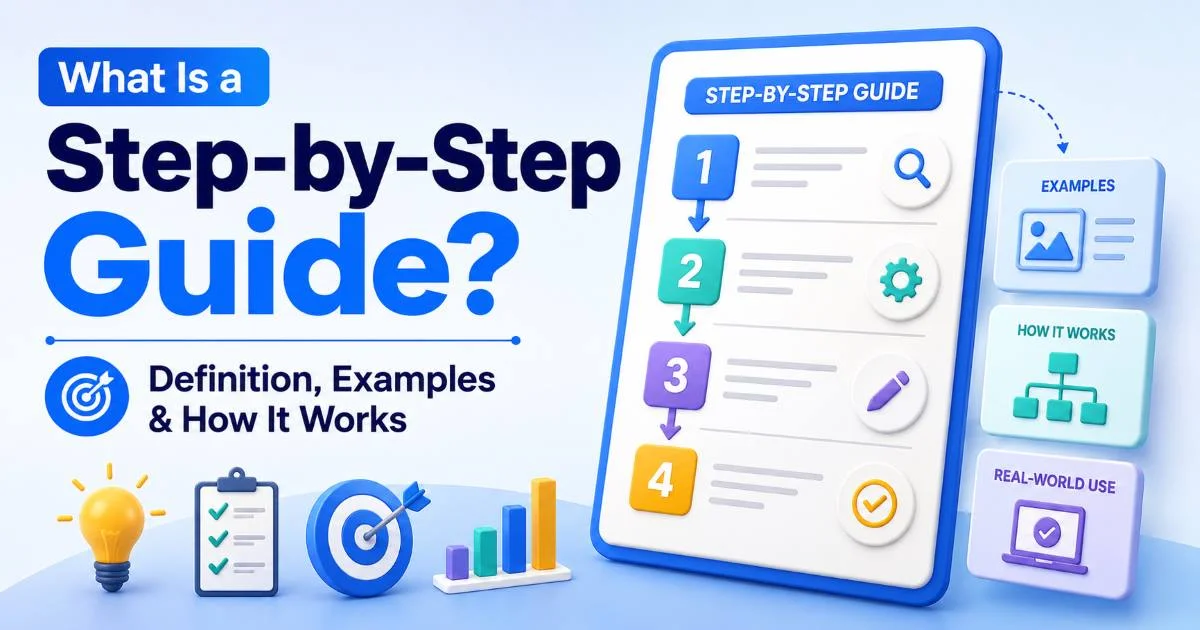
Learning how to write guides is one of the most valuable skills any content creator or educator can develop. A guide is a structured piece of content designed to explain a process, teach a concept, or walk someone through a task from start to finish.
Whether you're building step-by-step tutorials for software onboarding or crafting beginner guides for a new hobby, the underlying craft remains the same: break complexity into clarity. Understanding how to write guides effectively means respecting your reader's time and meeting them exactly where they are.
Key Takeaways
- Great guides prioritize the reader's goal over the writer's expertise.
- Every guide needs a clear structure with logical, sequential steps.
- Visuals and formatting dramatically improve comprehension and retention rates.
- Testing your guide with real users reveals blind spots you can't see.
- Process documentation saves organizations thousands of hours annually in training.

How Guides Work: Anatomy of Effective Instructions
At its core, every guide follows a simple pattern: identify a goal, break it into sequential actions, and explain each action clearly enough that someone unfamiliar can follow along. This sounds straightforward, but the execution separates mediocre content from truly helpful resources.
Structure and Flow
The best user instructions follow a predictable architecture. They open with context (what the reader will accomplish and what they need beforehand), move through numbered steps, and close with verification of how to confirm the task was completed successfully.
Each section should answer one question at a time. When you try to address multiple objectives in a single section, readers lose their place, and their confidence drops.
Start every guide by writing the end state first: what does success look like for your reader?
Writing the Actual Steps
Strong steps begin with an action verb. "Click the Settings icon" is better than "The Settings icon can be found in the upper right corner." The reader came to do something, so lead with the doing.
Keep each step focused on a single action. If a step requires a sub-decision or branching path, break it into numbered sub-steps rather than burying options inside a paragraph. This is a core technical writing tip that professionals use across every industry.
Why Guides Matter for Creators and Educators
Content creators who understand how to write guides unlock a content format with enormous staying power. Unlike opinion pieces or news articles, well-written guides remain relevant for months or years, accumulating search traffic and building authority over time.
Business and Education Use Cases
In business, process documentation reduces onboarding time for new employees and standardizes operations across teams. A company with 50 employees can save hundreds of hours per quarter simply by documenting its ten most common workflows.
In education, guides and step-by-step tutorials transform abstract concepts into actionable learning paths. Tools like AI assistants for students and researchers are making it even easier to generate initial drafts that educators can refine and personalize.
The Scale Advantage
A single well-crafted guide can serve thousands of readers simultaneously. Compared to one-on-one training or live workshops, the economics are staggering. This is why organizations from startups to universities invest heavily in written instructional content.
Platforms like Guide Generator exist specifically to help creators produce these resources faster without sacrificing quality. The demand for structured, accessible how-to content has never been higher.
"A guide written once can teach a thousand people — that's the kind of leverage no live workshop can match."
Common Misconceptions About Writing Guides
There are several persistent myths about guide writing that hold creators back. Recognizing them early will save you revision cycles and help you produce better content from the start.
Myth: More Detail Is Always Better
Beginners often assume that thoroughness means including every possible edge case and scenario. In reality, overloaded guides overwhelm readers and bury the core instructions. The goal is sufficient detail for the target audience, and not a word more.
Think about who you're writing for. Beginner guides need more context and fewer assumptions about prior knowledge. Expert-facing guides can skip fundamentals and focus on advanced configurations or nuanced decisions.
Adding excessive detail to appear thorough often backfires — readers skim past the critical steps buried in walls of text.
Myth: Guides Are Just Lists of Steps
Steps are the skeleton, but a great guide includes context, rationale, and troubleshooting. Telling someone what to do is only half the job; briefly explaining why builds understanding and helps readers adapt when circumstances change.
Consider adding a "What can go wrong" section or inline tips after particularly tricky steps. This transforms your content from a rigid recipe into a genuine learning experience, which is the hallmark of good process documentation.
If your guide topic has well-known failure points, address them proactively rather than leaving readers to discover them alone.
Guides vs. Related Content Formats
Understanding how guides relate to similar formats helps you choose the right one for each situation. The terminology gets blurred often, but there are meaningful differences that affect how you structure your content.
Tutorials vs. Guides
Tutorials are typically hands-on, learning-oriented experiences. A tutorial walks you through building a specific project so you absorb the principles along the way. A guide, by contrast, focuses on accomplishing a practical goal; it's more about the outcome than the educational journey.
Both formats overlap considerably, and many pieces of content blend elements of each. When you're learning how to write guides, knowing this distinction helps you decide how much teaching to embed versus how quickly to get readers to completion.
If your reader's primary intent is "get this done," write a guide. If it's "understand this concept," write a tutorial.
Documentation vs. Guides
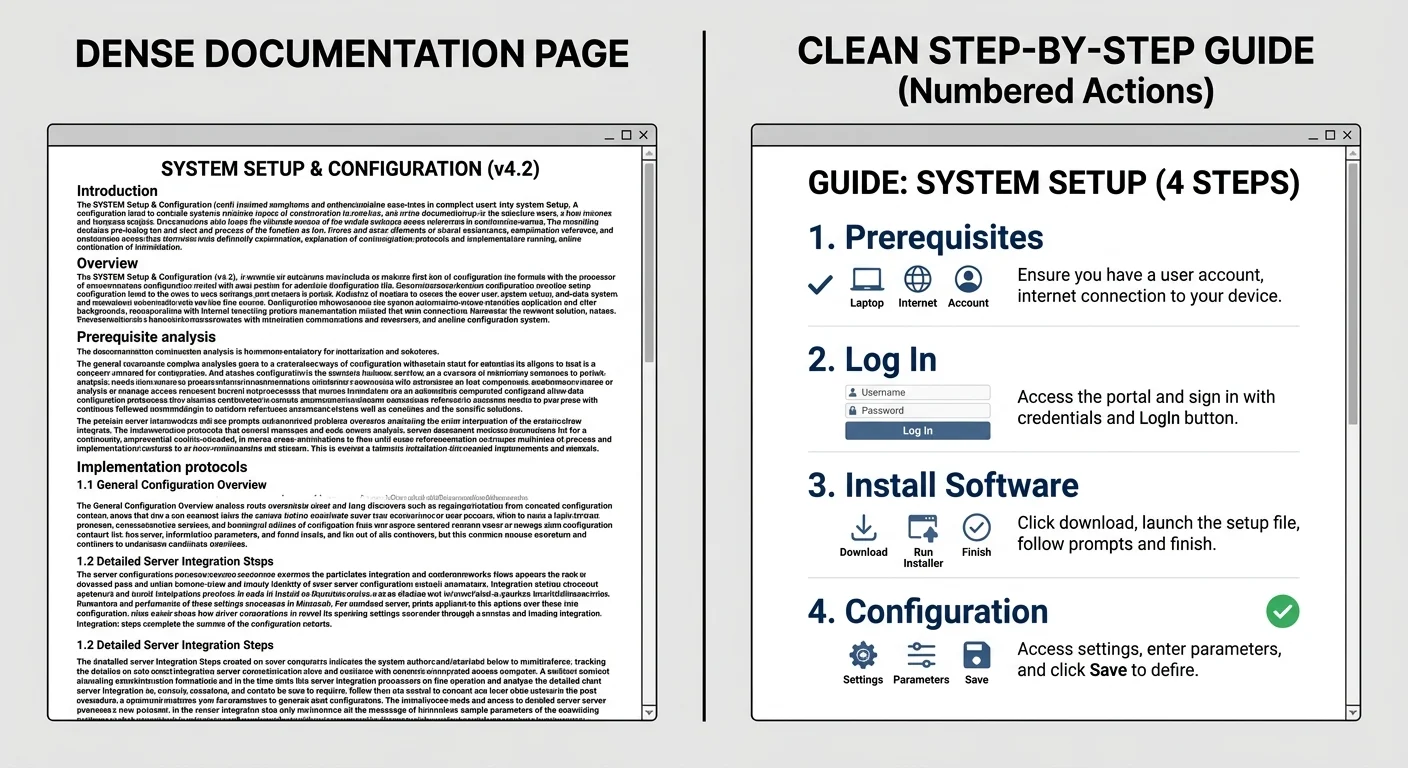
Technical documentation is typically comprehensive, reference-style content that covers every feature or parameter of a system. Guides are selective; they address one specific workflow or outcome. Documentation tells you everything possible; a guide tells you exactly what to do right now.
The best resource libraries include both. Your product documentation serves as the encyclopedia, while your guides serve as the curated paths through it. Many technical writing tips apply equally to both formats, but the tone and scope differ significantly.
| Format | Primary Goal | Typical Length | Best For |
|---|---|---|---|
| How-To Guide | Complete a specific task | 500–2,000 words | Practical, goal-oriented readers |
| Tutorial | Teach through a project | 1,000–3,000 words | Learners building new skills |
| Quick-Start Guide | Get running fast | 200–800 words | Impatient users, simple products |
| Reference Docs | Cover all features | Varies widely | Developers, power users |
| FAQ / Troubleshooting | Solve specific problems | 100–500 words each | Support deflection, self-service |
Frequently Asked Questions (FAQs)
Q: What makes a good guide?
A good guide explains one clear goal, uses simple steps, and helps readers finish the task easily.
Q: Should guides include too much detail?
No. A guide should include only the details readers need, because too much information can confuse them.
Q: Why are guides useful?
Guides save time, improve learning, and help many people follow the same process correctly.
Final Thoughts
Mastering how to write guides isn't about literary flair; it's about empathy, structure, and relentless clarity. Every guide you publish is a promise to the reader: follow these steps, and you'll get the result. Keep that promise, and your content becomes the kind of resource people bookmark, share, and return to again and again.
Disclaimer: Portions of this content may have been generated using AI tools to enhance clarity and brevity. While reviewed by a human, independent verification is encouraged.