Learning how to write guides, step-by-step tutorials, and clear writing instructions is one of the most valuable skills for any beginner content creator in 2026. But here's the problem: most people use the terms "guide" and "tutorial" interchangeably, which leads to confused readers and underperforming content.
These two formats actually serve different purposes, attract different audiences, and require different structures. If you understand the distinction, you can pick the right format every time and create content that genuinely helps people.
This comparison breaks down exactly where each format excels and where it falls short, so you can make smarter decisions about your content creation strategy.
Key Takeaways
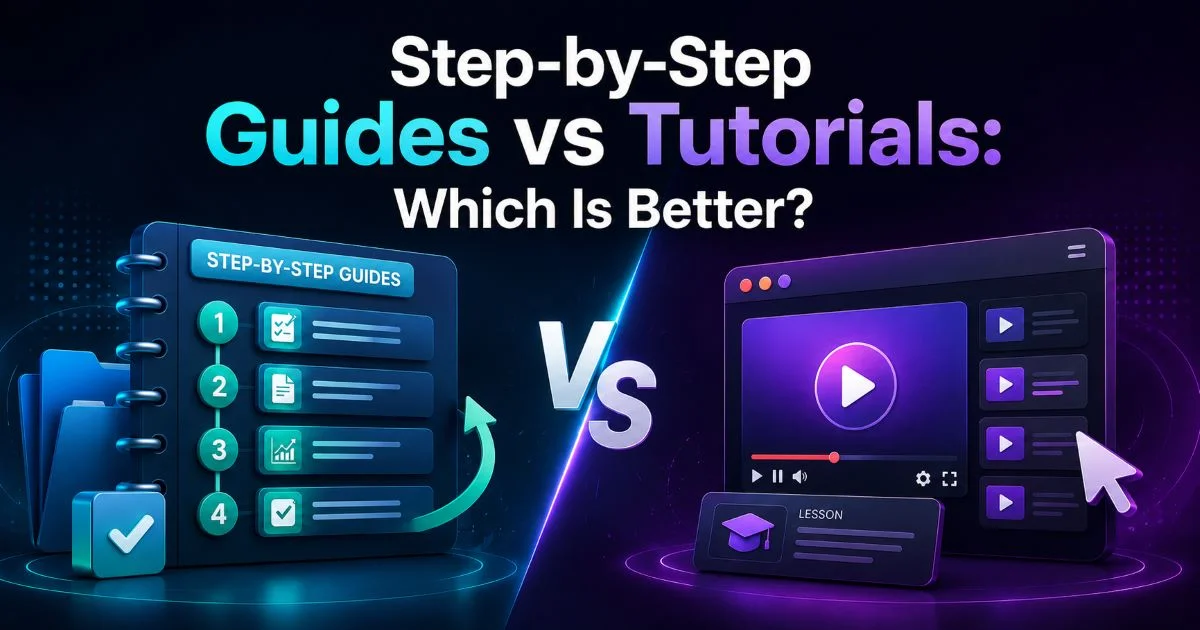
- Step-by-step guides focus on completing a specific task from start to finish.
- Tutorials teach broader concepts and skills through explanation and practice.
- Guides rank better for action-oriented search queries with clear intent.
- Choose your format based on what your reader needs to accomplish, not personal preference.
Format and Structure Differences
Anatomy of a Step-by-Step Guide
A step-by-step guide is built around sequential actions. Each step is numbered, specific, and designed to move the reader toward a single, clear outcome. There's minimal theory involved; the reader follows instructions and arrives at a result. Understanding what a step-by-step guide really is helps you appreciate why this format works so well for task-oriented content. Think of recipes, software installation walkthroughs, or assembly instructions.
The strength of this format is its directness. Readers don't need background knowledge to follow along because each step builds on the previous one. The reader knows exactly where they are in the process and what comes next, which dramatically reduces drop-off rates.
Number every step in your guide and start each one with an action verb like "Click," "Open," or "Select."
Anatomy of a Tutorial
Tutorials take a fundamentally different approach. Rather than simply listing actions, they explain the reasoning behind each step. A tutorial on photo editing won't just say "adjust the contrast slider," it'll explain what contrast does, when you'd want more or less of it, and how it interacts with other settings. This educational layer is what separates tutorials from guides.
Read also How to Add AI Narration to Videos Automatically
The trade-off is length and complexity. Tutorials tend to run longer because they include context, examples, and sometimes exercises. They're ideal for how to write tutorials that teach transferable skills rather than one-off tasks. A reader finishing a tutorial should understand the topic well enough to adapt what they learned to new situations, not just replicate a single outcome.
Audience Reach and SEO Performance
Search Intent Alignment
Search intent is where these two formats diverge sharply in performance. Queries like "how to reset iPhone" or "how to file taxes online" signal transactional intent; the person wants to do something right now. Step-by-step guides dominate these results because Google recognizes their direct, action-oriented structure. They frequently earn featured snippets and position zero rankings.
Tutorials perform better for informational queries where users want to understand a topic deeply. Searches like "learn Python basics" or "understand color theory" favor tutorial content because readers expect explanation, not just instructions. If you're doing beginner content creation, matching your format to the right search intent is half the battle. Misaligning format and intent almost guarantees poor rankings regardless of content quality.
Engagement and Retention Metrics
Guides typically show higher completion rates but lower time-on-page. Readers arrive, follow the steps, and leave once they've solved their problem. That's actually a sign of success, not failure. Tutorials generate longer session durations and more return visits because readers often bookmark them as reference material. Both patterns can signal quality to search engines depending on the query type.
For content writing tips that actually move the needle, pay attention to which metric matters for your chosen format. A guide with eight minutes of time-on-page might indicate confusion, while a tutorial with the same metric suggests deep engagement. Context changes everything. Using tools like an AI tutor can help you understand which engagement signals apply to your specific content type.
Don't compare engagement metrics between guides and tutorials directly — they measure success differently.
How to Choose the Right Format for Your Content
A Simple Decision Framework
Ask yourself one question before writing: Does your reader need to do something specific, or learn something broadly? If a friend texted you the same question, would you send them a numbered list of steps or sit them down for a longer explanation? That gut reaction usually points you toward the right format. Most writing instructions for practical tasks belong in a guide format, while skill-building topics naturally fit tutorials.
| Scenario | Best Format | Why |
|---|---|---|
| Install WordPress plugin | Step-by-step guide | Single task, clear endpoint |
| Learn CSS flexbox | Tutorial | Conceptual understanding needed |
| Set up email forwarding | Step-by-step guide | Sequential actions, no theory required |
| Understand SEO basics | Tutorial | Multiple connected concepts to teach |
You can also blend both formats when a topic demands it. A tutorial about beginner guides to photography might include tutorial-style explanations of aperture and shutter speed, then shift into a step-by-step guide for taking your first portrait. The key is structuring each step for maximum reader clarity, regardless of which format you choose. Hybrid content works when transitions between teaching and instructing feel natural.
"The best content creators don't pick a favorite format — they pick the right format for each reader's actual need."
One common mistake among beginner content creators is defaulting to tutorials when a guide would serve readers better. If you're covering a process with a definitive right way to complete it, strip out the theory and write a guide. Save tutorials for topics where understanding the "why" genuinely changes how someone applies the information. This discipline keeps your content focused and your readers satisfied, which is ultimately what builds a loyal audience.
Don't pad a simple guide with unnecessary theory just to increase word count — readers will bounce.
Frequently Asked Questions
?How do I start each step in a step-by-step guide?
?Can one piece of content work as both a guide and a tutorial?
?Does writing a tutorial take significantly longer than a guide?
?Is it a mistake to use 'guide' and 'tutorial' as interchangeable titles?
Final Thoughts
Neither step-by-step guides nor tutorials are universally better; they solve different problems for different readers. Match your format to the reader's intent and the complexity of the topic. Start with guides if you're new to content creation because they're faster to produce and easier to structure well. As your confidence grows, add tutorials to your repertoire and watch your content library serve a much wider audience.
Disclaimer: Portions of this content may have been generated using AI tools to enhance clarity and brevity. While reviewed by a human, independent verification is encouraged.